
Heating Requirements in This Industry
Home appliance manufacturing is a high-volume, cost-sensitive field. What is expected from a heater is millimetre-level repeatability to the approved dimensions, long life and reliable supply. Because the products operate in end-user environments, electrical safety requirements are strict: leakage current, insulation resistance and earth continuity are tested on every product.
Typical Heating Applications
- Top, bottom and fan heating elements for built-in and countertop ovens
- Water heating in dishwashers and washing machines
- Air heating for drying functions
- Demisting of mirror and panel surfaces
Which Heater, and Why?
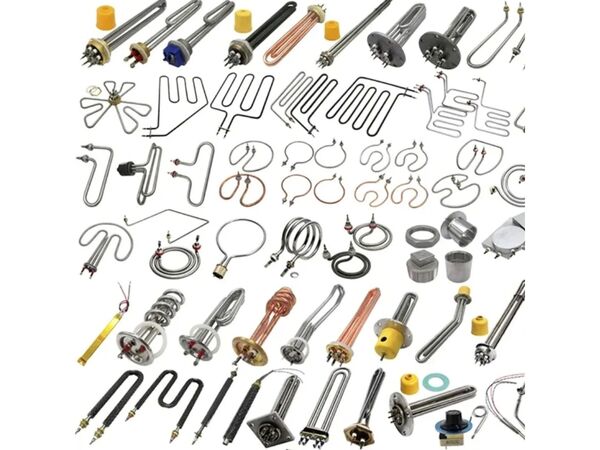
- Tubular Heater — Stainless or copper bodies bent to your technical drawing are used in oven and water heating elements.
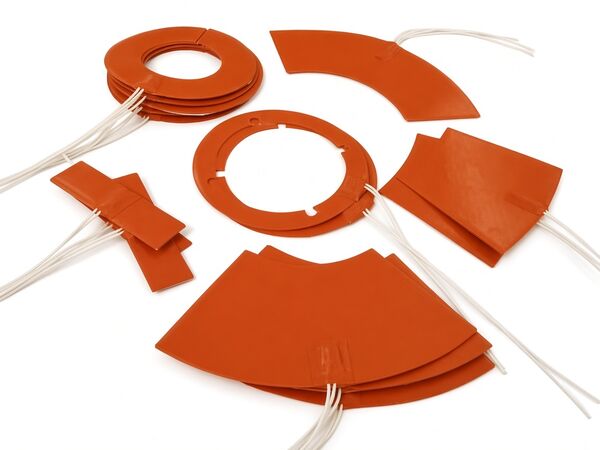
- Flexible Silicone Rubber Heater — Its thin construction allows it to be bonded to flat and curved surfaces, providing surface heating in tight spaces.
- Anti-Fog Mirror Heater — Applied to the back of mirrors and panels thanks to its thin-film construction.
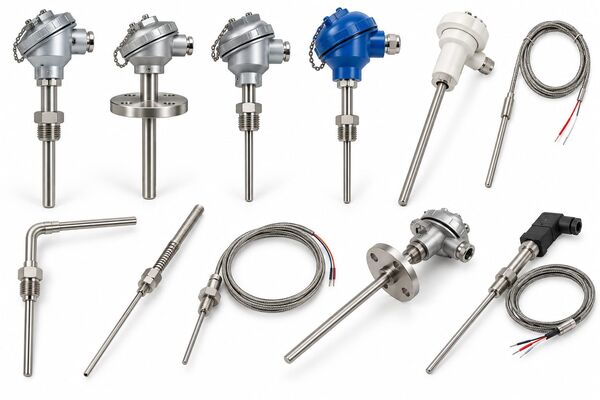
- Thermocouples, Temperature Sensors and Connectors — Temperature measurement integrated into the product is carried out with sensors compatible with the control board.
- Thermostats and Temperature Controllers — Capillary thermostats provide control and over-temperature protection in oven and water heating circuits.
Our Products Used in This Industry

Key Considerations
In home appliances, the heater is designed together with the electrical safety requirements of the appliance: insulation resistance, leakage current and earth continuity are the basic checks. For water heating elements, the body material is chosen according to water hardness. For oven elements, surface temperature and power distribution determine how evenly food is cooked. Connection terminals and mounting brackets should be standardised to suit the appliance assembly line.
- After sample approval, dimensions and connection geometry are fixed under the product code.
- 100% insulation and high-voltage testing is standard practice.
- Copper or stainless sheath is chosen against limescale according to water hardness.
- Batch test records can be requested for high-volume production.
Custom Manufacturing and Quotation
In home appliance projects, the process moves forward through sample approval. A quotation is prepared from the technical drawing, target power, voltage and annual quantity; samples are then produced and tested. After approval, the dimensions and connection geometry are fixed under the product code, and in series production every product passes an insulation and high-voltage test. Measured values are entered in the product traceability record.
Related Industries
Let us define the right solution for your project together
Contact us to determine the most suitable heater and industrial heating solution for your project. Our technical team is ready to offer the solution that best fits your requirements.