
Heating Requirements in This Industry
In plastics processing, temperature directly determines product quality. The temperature profile along the barrel, where the granules are melted, is controlled zone by zone; the material must not freeze in the nozzle, and the mould must deliver the required surface quality. A deviation of a few degrees shows up in the part as flash, burn marks, short shots or sink marks. That is why, in this sector, sensor position and control method are as decisive as the choice of heater.
Typical Heating Applications
- Melting the granules zone by zone along the barrel (cylinder)
- Delivering the melt through the nozzle to the mould without it freezing
- Maintaining melt temperature in the hot runner manifold and nozzles
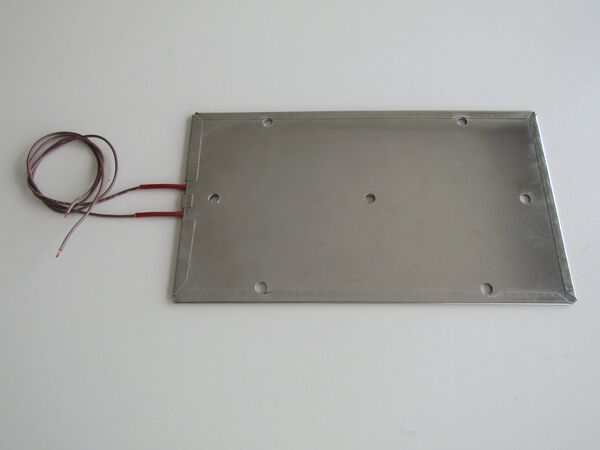
- Holding mould plates and cores at working temperature
- Heating extrusion heads and die lips
Which Heater, and Why?
- Mica Insulated Strip and Band Heaters — Its slim profile lets it sit tightly on barrel and nozzle bodies; an economical solution for medium-temperature zones.
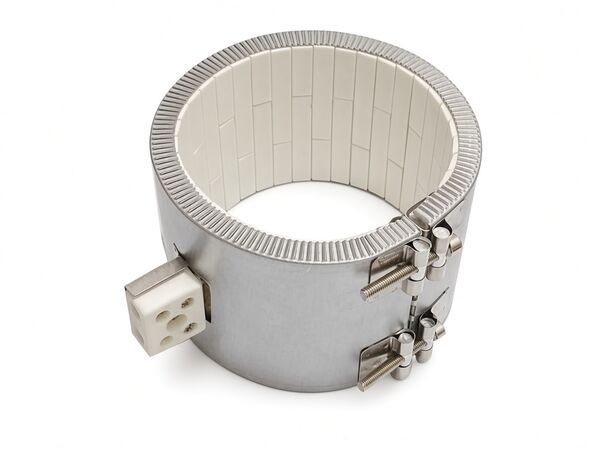
- Ceramic Band Heater — In barrel zones running at high temperature and with engineering plastics, ceramic insulation offers a longer service life.
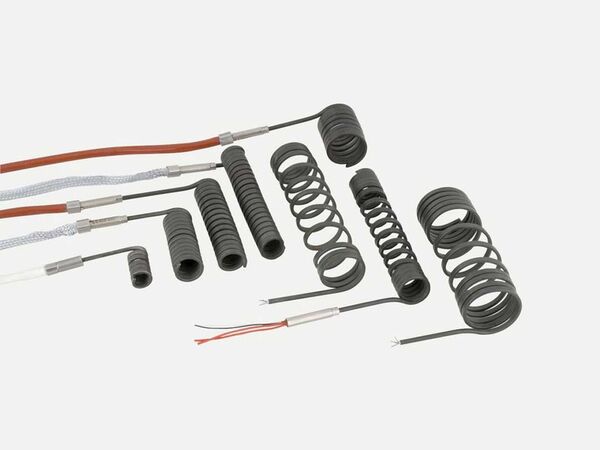
- Coil Heater (Hot Runner) and Nozzle Heater — Wound onto hot runner nozzles; with a distributed power profile it ensures uniform temperature along the nozzle.
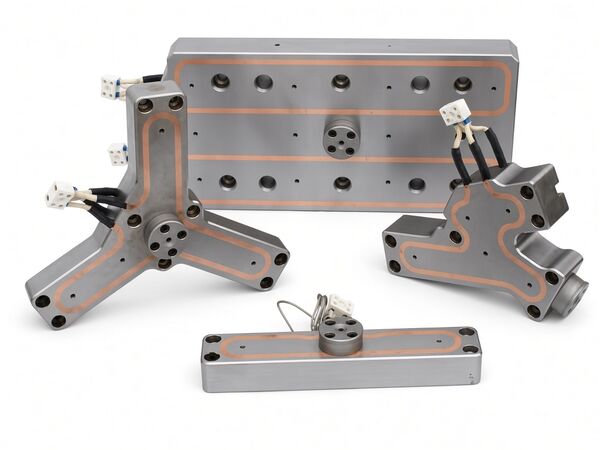
- Manifold Heater — Placed in channels machined into manifold blocks, it provides balanced heating along the length of the block.
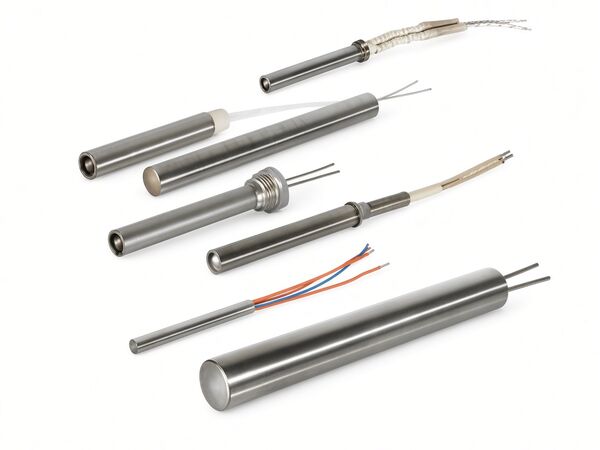
- Cartridge Heater — Provides local heating with high watt density in bores machined into mould plates and cores.
- Thermocouples, Temperature Sensors and Connectors — Accurate temperature measurement in every heating zone is the basis of PID control.
Our Products Used in This Industry
Key Considerations
Selection starts with the working temperature of the zone and the power required; the choice between mica and ceramic insulation is made on that basis. The band heater must match the barrel diameter exactly, and for cartridge heaters the bore tolerance and watt density must be assessed together. The sensor should be placed close to the heater, at a point that represents the melt temperature, and the choice of a type J or K thermocouple must match the input of the controller. The connection type (cable, terminal box or plug) is chosen according to movement on the machine and maintenance needs.
- On band heaters, the clamping force must always be re-tightened after the first heat-up.
- In hot runner applications, a distributed power profile ensures uniform temperature along the nozzle.
- Cartridge heater bores should be machined to H7 tolerance; an oversized bore noticeably shortens heater life.
- On multi-zone lines, a PID + SSR combination lasts much longer than contactor-based control.
Custom Manufacturing and Quotation
Band and nozzle heaters for plastics machinery are mostly made to machine-specific dimensions. Simply send us the diameter, width, power, voltage, connection type and the position of any holes or cut-outs via the quote form; if you have an old part, the dimensions can be taken from the sample. Our engineer prepares the wattage calculation and material recommendation, and production starts once the dimension list has been approved. The approved product code is then fixed, so spare and repeat orders are placed under the same code.
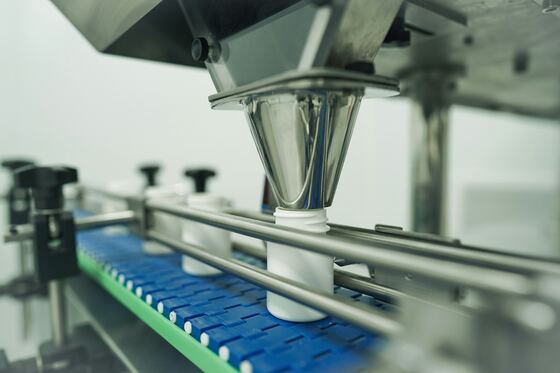
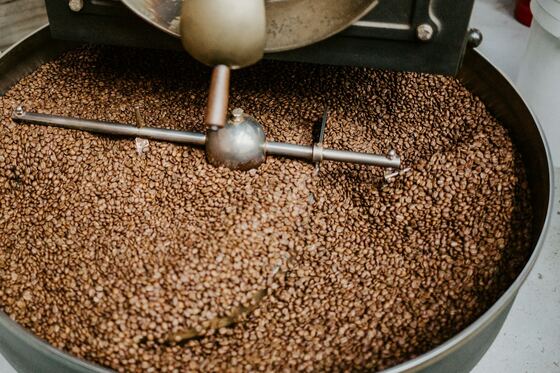
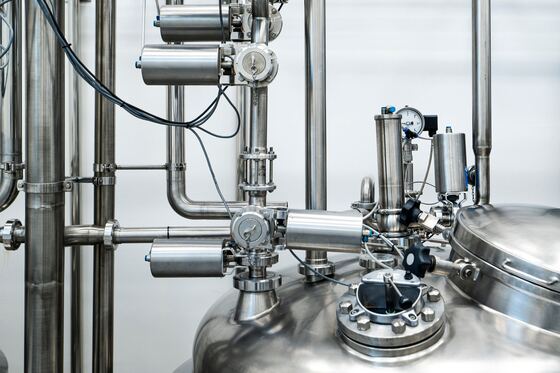
Related Industries
Let us define the right solution for your project together
Contact us to determine the most suitable heater and industrial heating solution for your project. Our technical team is ready to offer the solution that best fits your requirements.