
Heating Requirements in This Industry
On textile lines, heating is mostly used for drying and heat setting. Because fabric is a wide, continuously moving surface, the most critical property of the heat is uniformity. A difference of a few degrees across the width appears as variation in colour and hand in the fabric. In addition, airborne fibres build up on heater surfaces, lowering efficiency and creating a fire risk.
Typical Heating Applications
- Producing hot air in stenters and drying machines
- Heating fabric in fixing and heat setting processes
- Drying ink after digital and screen printing
- Surface heating on coating and lamination lines
Which Heater, and Why?
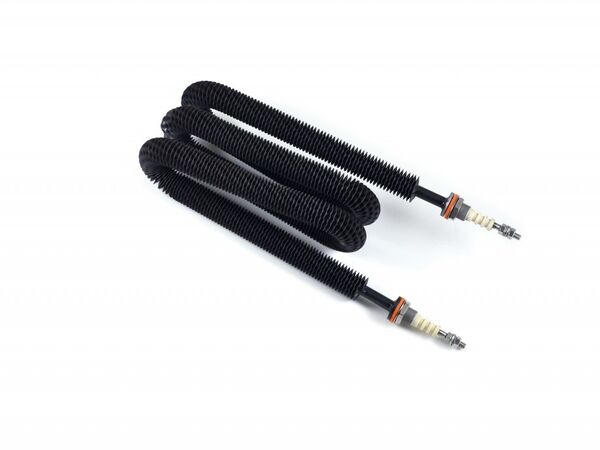
- Finned Tubular Heaters — Its finned body delivers high heat transfer to the air, and a wide fin pitch reduces fibre build-up.
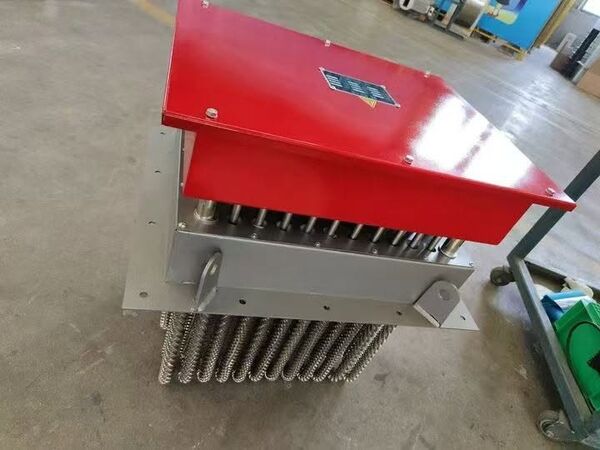
- Air Duct Heater — Flange-mounted in the air ducts of drying machines and suited to staged power control.
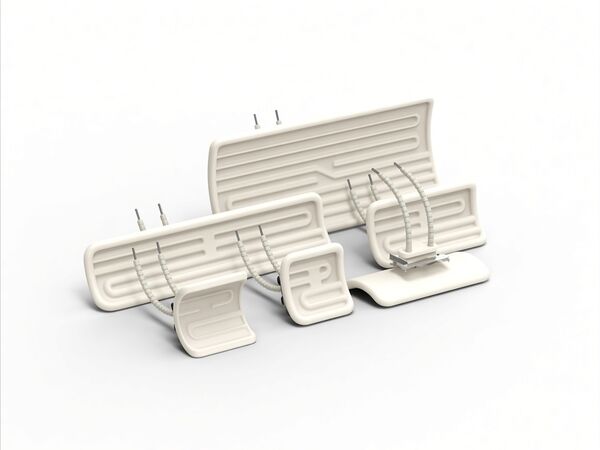
- Ceramic Infrared Heater — Provides uniform heating over a wide area in print drying with medium and long-wave radiation.
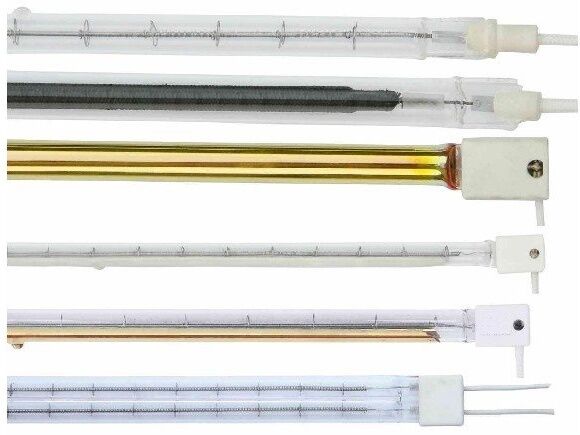
- Quartz Tube Heater — Responds quickly with short-wave radiation, an advantage in applications where line speed changes.
- Thermocouples, Temperature Sensors and Connectors — Measuring temperature close to the fabric in drying zones allows staged or proportional control to work correctly.
Our Products Used in This Industry
Key Considerations
Uniformity across the width of the fabric is the main criterion for heater layout in textiles; heaters should be arranged with an even power distribution across the full width. In environments with airborne fibres, the surface temperature should be kept low and the heater should be easy to clean. For air heating, a fan interlock and flow control are mandatory. In drying zones, the temperature sensor should be positioned so that it measures close to the fabric, and staged or proportional control should be preferred.
- In environments with airborne fibres, finned heaters with a wide fin pitch should be preferred.
- A low surface temperature design reduces the risk of accumulated fibres igniting.
- For print drying, medium wave infrared better matches the absorption band of the ink.
- A periodic cleaning programme is needed to maintain the efficiency of finned heaters.
Custom Manufacturing and Quotation
We manufacture heaters for textile machinery to the dimensions of the drying chamber and the air duct. The chamber or duct dimensions, air flow rate, target temperature and the power of the existing heater are a sufficient starting point for a quotation; the old element can also be sent as a sample. A power distribution and material recommendation are prepared, and production starts once the dimension list has been approved.
Related Industries
Let us define the right solution for your project together
Contact us to determine the most suitable heater and industrial heating solution for your project. Our technical team is ready to offer the solution that best fits your requirements.