
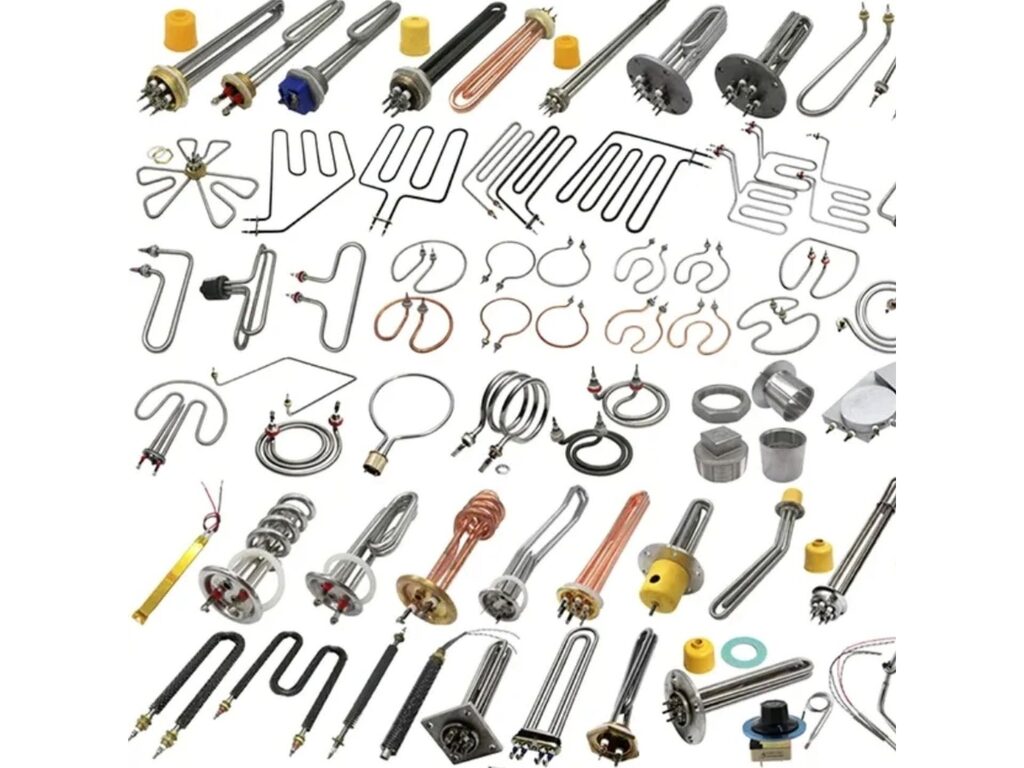
NiCr wire coiled inside a stainless steel or Alloy 800 series tube, compacted with vibrated MgO filling and a swaging press. Produced in U, W, spiral and custom shapes to the customer's drawing.
Also known as: Tubular heater · Tubular heating element
You can upload your technical drawing via the quote form.
General Information
The tubular heater is the most fundamental and widespread product in industrial heating. NiCr resistance wire placed inside a stainless steel or Alloy 800 series tube is surrounded with high-purity magnesium oxide (MgO) powder; the powder is compacted by vibration and the tube is passed through a swaging press to reduce its diameter. This process turns the MgO into a stone-hard mass — both an excellent electrical insulator and a good heat conductor.
After production, the tube is given its shape by custom bending according to the technical drawing. U, W, double U, spiral and multi-layer shapes are standard; custom geometries are produced to the customer's drawing. Cold zones are left at the ends so that no heat is generated on the section outside the flange or socket.
Material selection depends on the fluid to be heated. AISI 304 is preferred for water and general-purpose use, AISI 316 for chloride-containing environments, and AISI 321 and Alloy 800 for high temperatures and air heating. Watt density also depends on the fluid: up to 10 W/cm² is possible in water, while exceeding 3 W/cm² in oil leads to cracking and carbon build-up on the surface.
Applications
- Liquid heating
- Mould heating
- Ovens
- Boilers
- Air heating
- Tanks
Related Industries
Frequently Asked Questions
Oil does not carry heat away as well as water. At high watt density the oil cracks on the heater surface, a carbon layer forms, and this layer blocks heat conduction and causes the heater to burn out. Watt density is therefore kept low in oil applications; the right value is defined for each project according to the oil type and flow conditions.
Running a heater designed for liquid without liquid is the most common cause of failure. A heater that operates safely immersed in liquid cannot dissipate the same power in air and burns out quickly. A thermostat with level protection or a level switch is recommended.
Related Guides
Related Products
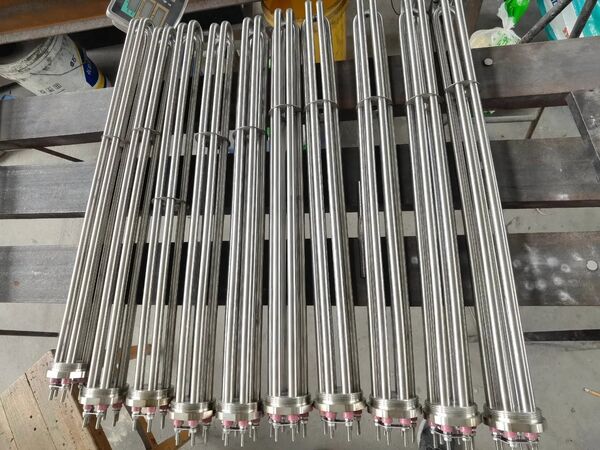
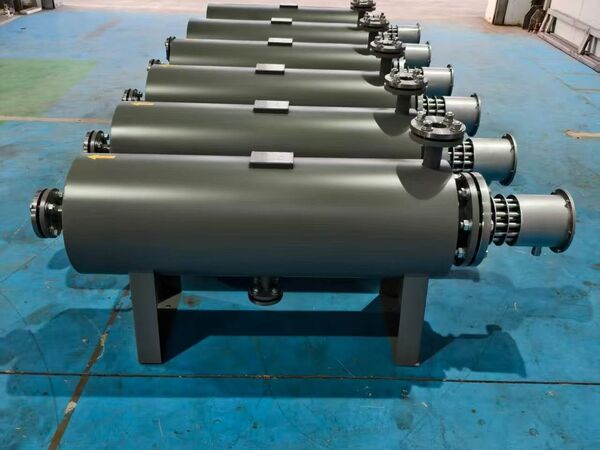
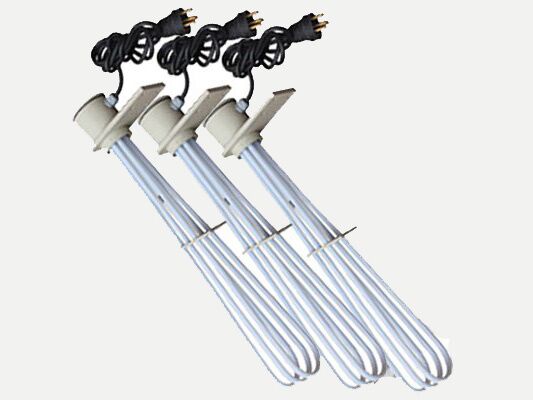

Let us define the right solution for your project together
Contact us to determine the most suitable heater and industrial heating solution for your project. Our technical team is ready to offer the solution that best fits your requirements.