
Heating Requirements in This Industry
In food production, two additional constraints govern heater selection: contact surfaces must be food-safe and easy to clean. Heaters in fryers, cooking kettles, drying tunnels and filling lines are washed regularly; the surface therefore needs to be smooth, free of corners and stainless. In oil heating applications, keeping the watt density low prevents carbonisation on the surface and the resulting off-flavours.
Typical Heating Applications
- Heating oil in fryers and frying lines
- Heating water, syrup and sauces in cooking kettles and process tanks
- Producing hot air in drying and roasting tunnels
- Heating pipe, valve and hopper surfaces on filling lines
- Radiant heating on cooking conveyors
Which Heater, and Why?
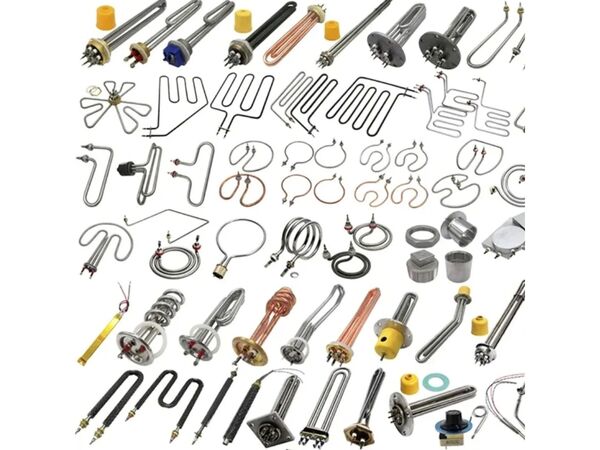
- Tubular Heater — With its stainless sheath and bends made to your technical drawing, it is immersed directly in fryers, kettles and tanks.
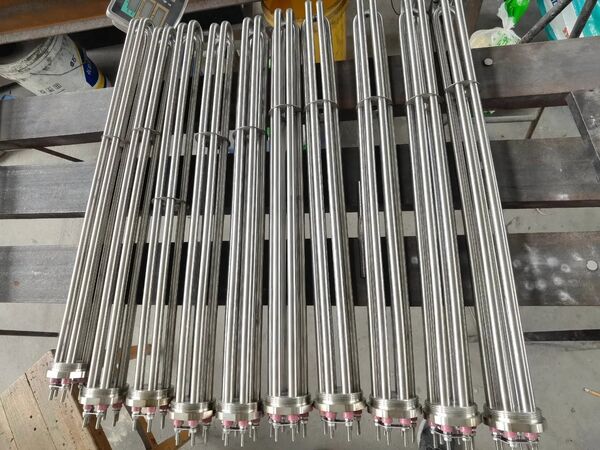
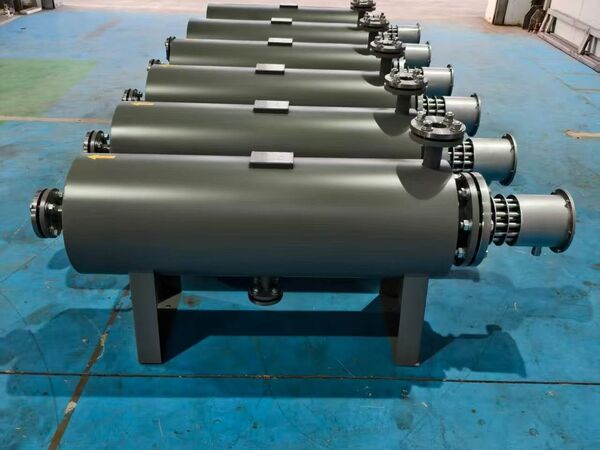
- Flanged and Heat Exchanger Heaters — In large tanks, a multi-element bank is removed from a single flange, making cleaning and maintenance easier.
- Boiler and Tank Heaters — With screw plug or socket mounting, it offers a practical solution for small and medium-sized kettles.
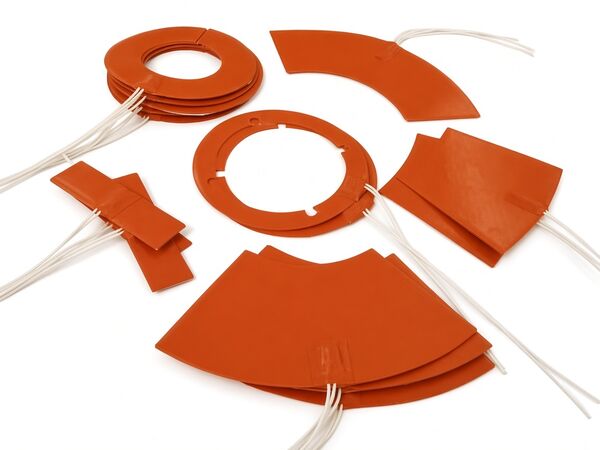
- Flexible Silicone Rubber Heater — Applied to filling hoppers and to pipe and valve surfaces with adhesive mounting, it keeps the product flowing.
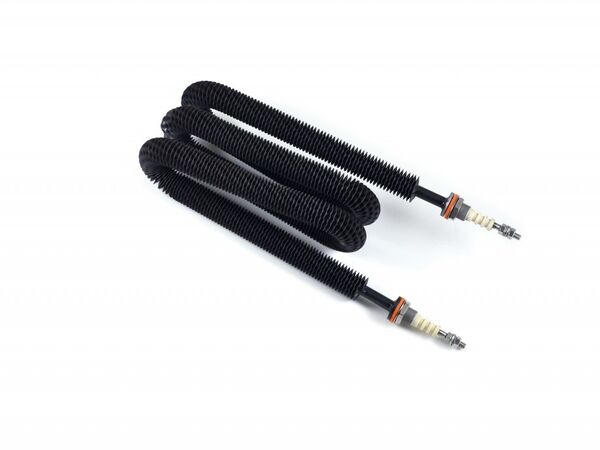
- Finned Tubular Heaters — With its finned body, it transfers heat efficiently to the air in drying and roasting tunnels.
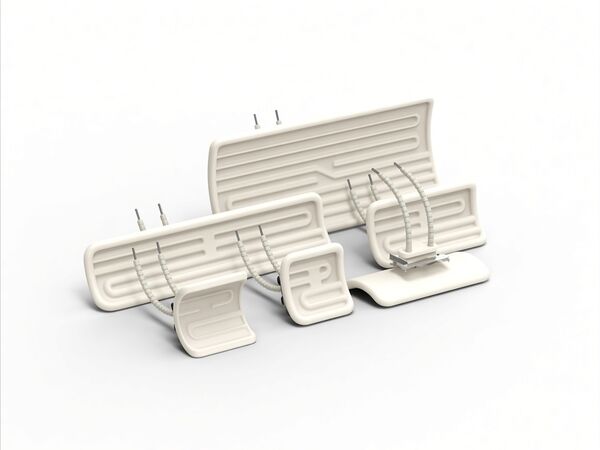
- Ceramic Infrared Heater — Provides non-contact, gentle and uniform heating of the product on cooking conveyors.
Our Products Used in This Industry
Key Considerations
For heaters in contact with food, the sheath material is chosen by assessing the salt and acid content of the product together with the cleaning chemicals. In oil heating, a low watt density prevents carbonisation; with water and syrup, limescale and deposit build-up must be taken into account. On machines that are washed down, the ingress protection rating of the terminal box and the cable entries must also be specified. Temperature is measured with a thermocouple or PT100 immersed in the product and connected to a thermostat or PID controller, and a level interlock is planned to guard against dry running.
- For oil heating, the watt density should not exceed 3 W/cm²; otherwise a carbon layer forms on the surface.
- AISI 316 stainless steel should be preferred for surfaces in contact with food.
- An interlock with a level switch is recommended to guard against dry running.
- If high-pressure water is used during cleaning, the terminal box should be rated IP65.
Custom Manufacturing and Quotation
For food machinery manufacturers, we design the heater around the hopper and tank geometry of the machine. Tank dimensions, the product to be heated, the target temperature, the expected heat-up time and the cleaning method are a sufficient starting point for selecting power and material. At the quotation stage, a wattage calculation and a sheath material recommendation are prepared; series production begins once the dimension list has been approved and the sample signed off.
Related Industries
Let us define the right solution for your project together
Contact us to determine the most suitable heater and industrial heating solution for your project. Our technical team is ready to offer the solution that best fits your requirements.