Updated: October 5, 2026
What is a finned tubular heater?
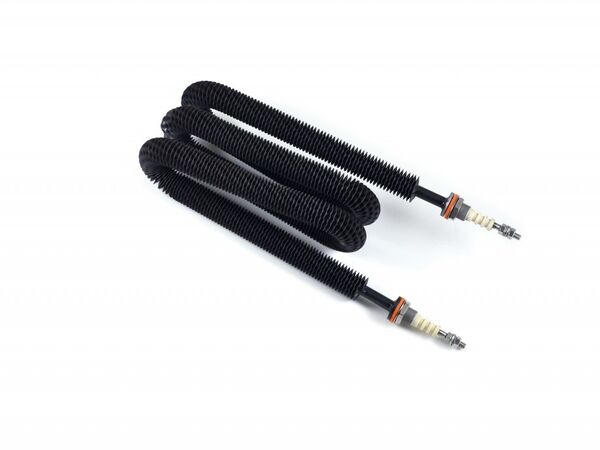
A finned tubular heater is made by bending an MgO-filled metal tube containing a resistance wire into a serpentine shape, so that a longer heated length fits into a limited space. When a metal strip (fin) is wound helically around the tube surface, the area in contact with the air increases; this type is known as a finned heater.
The internal construction of the element is the same as that of a tubular heater: resistance wire, compacted MgO filling and a metal sheath. The difference lies in its form and surface. Product options are listed on the finned tubular heaters page.
Other meanings of "coil" and "serpentine"
Serpentine generally describes a winding, snake-like form, so searches can mix up different fields. In heating and cooling installations, a bundle of bent tubes carrying water or refrigerant is also called a coil; the heat exchanger coils in calorifiers and fan-coil units use the word in this sense. In geology, serpentine is the name of a group of greenish minerals.
This guide covers only the electric heating element. An electric finned heater does not take heat from a fluid; it generates the heat itself in its internal resistance wire.
What do the fins do?
Air carries heat far less effectively than liquids. To deliver the same power in air, a bare tubular element has to run at a higher surface temperature. Fins solve this problem by multiplying the heat transfer surface several times:
- At the same power, the element surface temperature falls and the resistance wire is under less stress.
- More power can be delivered in the same size, so the heater becomes more compact.
- The outlet air temperature is distributed more evenly.
Fins are generally made of steel or stainless steel strip and wound onto the tube in tight contact. Fin pitch and height are selected according to air velocity and how contaminated the air is. A dense fin pattern provides more surface, but fouls more quickly in dusty or oily air.
Sheath and fin material
The sheath and fin material of a finned heater is selected according to the temperature and composition of the air. Steel-finned designs are common in general-purpose heaters working in dry, clean air. In applications involving humidity, condensation, chemical vapour or food contact, choosing stainless steel for the sheath and fins prevents corrosion.
In oven applications requiring a high outlet temperature, the sheath temperature also rises; in this case heat-resistant stainless grades (such as AISI 321) or an Alloy 800 series sheath are considered. The quality of contact between fin and tube also matters: a loose fin does not pick up heat well, can rattle under vibration and may shift over time.
Where very high temperatures and low airflow are involved, an unfinned element may be preferred; the required power is then spread over a longer total length. The right solution depends on the application.
Forms and mounting types
Finned heaters are bent into different forms depending on the volume to be heated and the mounting location:
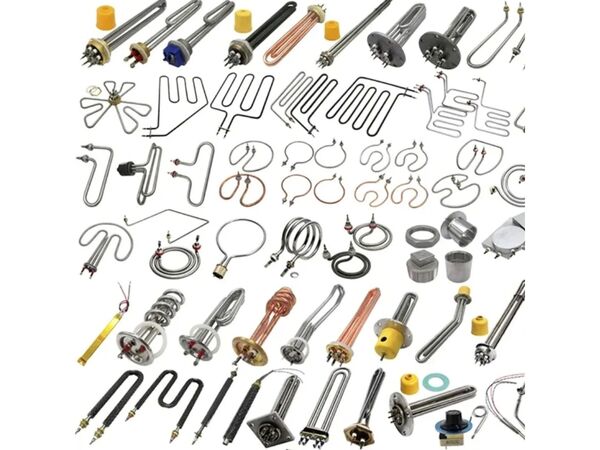
- U form: The most common form, with both ends exiting on the same side; it is fixed to the duct wall or a mounting plate.
- W and multi-bend (zigzag): Used to cover a wide duct cross-section with a single element.
- Straight and L form: Suitable for confined spaces and special housings.
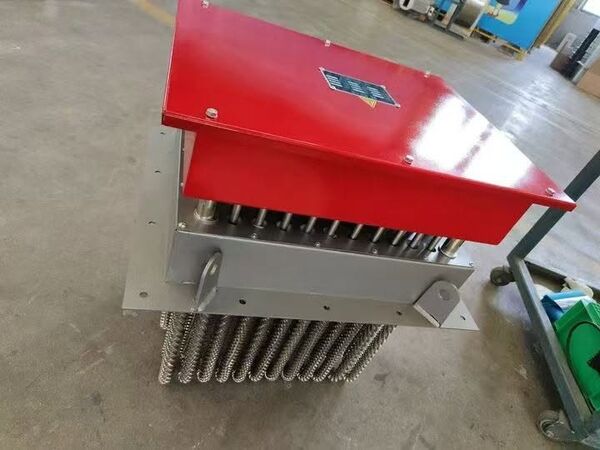
- Bank (block) heaters: Ready-made assemblies in which several elements are grouped on a frame or flange, such as an air duct heater.
The terminal ends are secured with compression fittings, nuts or a welded plate. The electrical connection is made in a terminal box outside the duct; the box's degree of protection against dust and moisture is selected according to the application.
Where are finned tubular heaters used?
- Drying ovens and cabinets: Paint, coating, textile, timber and food drying lines.
- Air ducts and air handling units: Fresh air heating, reheating and dehumidification applications.
- Process air: Packaging and shrink tunnels, hot-air bonding and forming.
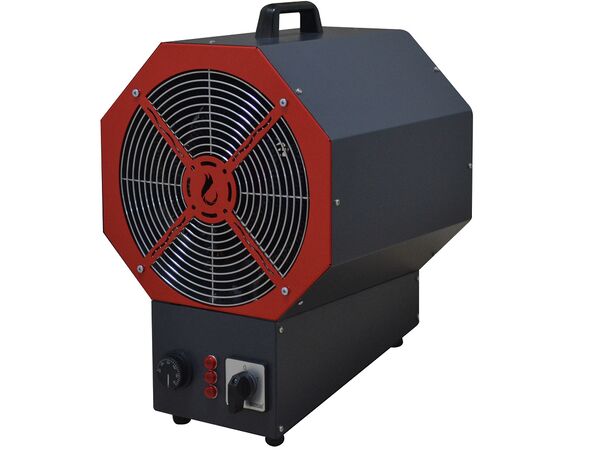
- Space heating: Fan heaters used in workshops, warehouses and cabins.
- Still-air applications: Heating inside control panels and enclosures, anti-condensation.
Unfinned serpentine forms are also used in media other than air: as immersion heaters in tanks and baths, or fitted into channels in mould plates.
How is the power of an air heater calculated?
The power required for an air heater is calculated from the airflow and the desired temperature rise. For air at ambient conditions, an approximate calculation is:
Required power (kW) ≈ Airflow (m³/h) × Temperature rise (°C) ÷ 3000
For example, heating 1,500 m³ of air per hour from 20 °C to 50 °C requires approximately 1,500 × 30 ÷ 3000 = 15 kW. A margin is allowed in the design for duct and housing losses, high altitude, outdoor air conditions and the heat-up time target.
Once the power is determined, the number of elements, their length and watt density are distributed taking into account the duct cross-section and air velocity. As air velocity falls, the permissible watt density falls too; the exact value depends on the application.
Points to watch in selection and use
- Do not run without airflow: When the fan stops, a finned element overheats quickly. An airflow switch and an electrical interlock between the fan and the heater are recommended.
- Delay the fan shutdown: Letting the fan run for a while after the heater is switched off removes the heat stored in the element and housing.
- Use over-temperature protection: A thermostat or temperature limiter fitted in the duct cuts the circuit if the control fails. The design is therefore made together with thermostats and temperature controllers.
- Choose the material to suit the environment: In humid air, air containing chemical vapours or air in contact with food, stainless steel fins and sheaths are preferred.
- Plan for cleaning: In dusty and oily air, the gaps between fins clog. Using filters and an accessible installation extends service life.
Frequently Asked Questions
In electric heating, a finned tubular heater is used to heat air or gas. Its serpentine form fits a long heated length into a small volume, and its fins enlarge the surface in contact with the air. Drying ovens, air ducts and fan heaters are its main applications.
An unfinned serpentine heater is a smooth-surfaced tubular element bent into a winding shape and can also be used in liquids. In the finned type, a metal strip is wound around the tube; because the surface area is larger, it runs at a lower surface temperature in air at the same power.
The form (U, W, straight), total length and leg spacing, tube diameter, power and voltage, whether it is finned, the connection type (compression fitting, nut, plate), and the airflow and target temperature are sufficient. A dimensioned drawing or a sample speeds up the assessment.