Updated: October 5, 2026
Why is there no single heating element price?
The fixed prices seen on online marketplaces are generally for standard-size, low-volume, general-purpose products. In an industrial application, by contrast, a heating element is manufactured to a definition of its diameter, length, power, sheath material, connection method and operating environment. Each of these parameters changes the amount of material, the labour and the testing process.
Moreover, the cheapest heating element is not always the most economical choice. When an element unsuited to the application fails early, the cost is not just the price of the part; machine downtime, scrapped product and maintenance labour also have to be taken into account.
The headings below show which items make up a heating element quotation and where price differences come from.
Sheath material
The sheath material is one of the items that most affects the price, and it is selected according to the environment:
- Copper and steel: Economical options for non-corrosive media such as clean water and oil.
- AISI 304 stainless steel: The general-purpose and most common sheath material.
- AISI 316 / 316L: For chloride-bearing and more corrosive media.
- AISI 321 and Alloy 800: For applications requiring high-temperature and oxidation resistance.
- Titanium, quartz and PTFE coating: For aggressive chemicals such as acid baths; the acid bath heater belongs to this group.
Material selection is not just a price item: in a corrosive environment, a cheap sheath will soon be perforated, even if the element is electrically sound.
Dimensions, power and watt density
As size increases, the amount of tube, wire and filling used increases. However, price does not rise linearly with length alone:
- Small-diameter, long elements demand greater precision in manufacturing.
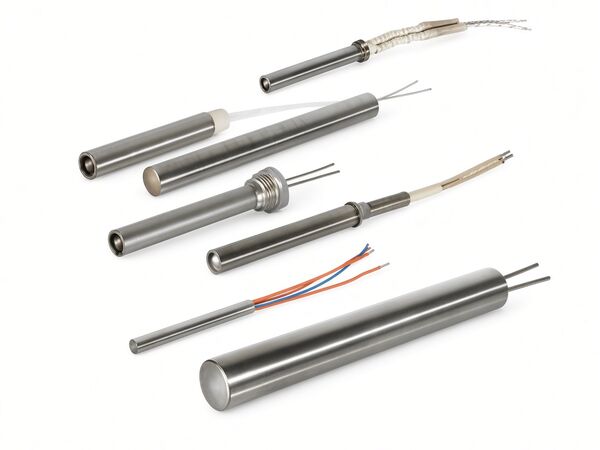
- A tight diameter tolerance, for example in cartridge heaters, may require grinding and additional inspection.
- A high watt density calls for higher-grade resistance wire and filling.
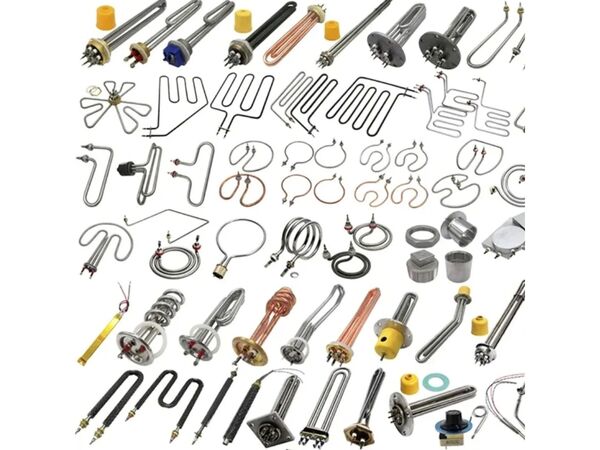
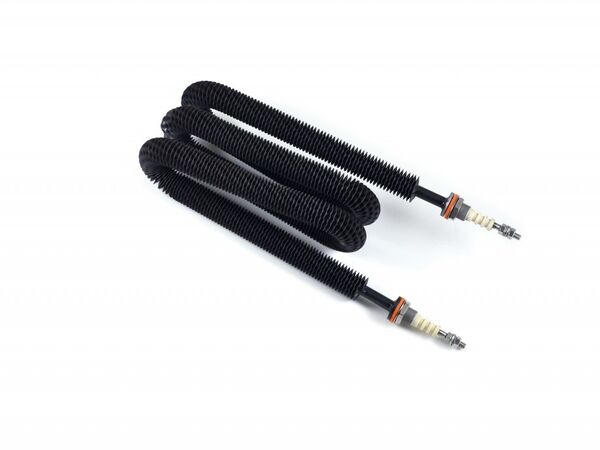
- Special bends, finned serpentine forms and fin winding add labour.
Rather than being a cost item on its own, power determines the watt density together with the dimensions. Delivering the same power at a lower watt density requires a larger element, but extends its life.
Standard size or custom manufacture?
There are two basic routes to sourcing heating elements. For products made in standard sizes, the dimension, power and connection options are predefined; since there is little design and preparation work, price and lead time are easier to determine. In custom manufacture, the dimensions, form, power distribution and connection are designed to suit the application.
Custom manufacture does not always mean more expensive. A heating element that fits the machine exactly works more efficiently, needs no additional fixtures for installation and may last longer. For example, instead of a standard tubular heater for a tank, an element bent to the dimensions of the tank can deliver the same power at a lower watt density.
If the enquiry states whether an exact replacement for an existing product or an improved design is required, the quotation is prepared accordingly.
Insulation and connection type
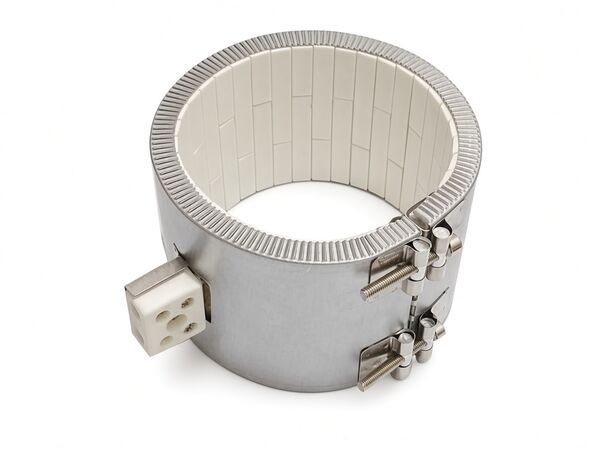
The insulation material is selected according to the operating temperature and directly affects cost. In band heaters, for example, mica insulation is more economical; the ceramic insulation used for higher temperatures involves more parts and labour.
On the connection side, the main choices that affect cost are:
- Cable type and length: silicone, fibreglass or high-temperature cable.
- Mechanical protection: metal braid, spiral conduit.
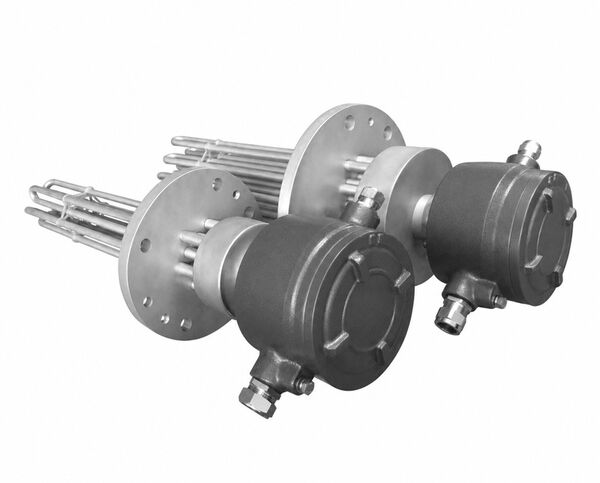
- Connection hardware: compression fitting, flange, terminal box.
- Degree of protection: terminal box protected against dust and moisture.
- Integrated sensor: thermocouple or PT100.
Quantity, certification and lead time
Quantity is one of the strongest factors determining the unit price. In single-piece or sample production, machine set-up, fixtures and test preparation are divided over a few parts; in series production the same preparation is spread over many parts. Repeat orders with a fixed product code also make planning easier.
Certification requirements also change the cost. For equipment for explosive atmospheres such as explosion-proof heaters, or in projects requiring special tests, material certificates, measurement reports or documentation to the customer's specification, these items are added to the scope of the quotation.
The expected lead time is also part of the price. An element made from standard materials in stock and one that requires special material procurement have different preparation times. Lead time is stated with the quotation according to material and quantity.
The difference between price and total cost
In a purchasing decision, the total cost of a heating element in the field matters as much as its unit price:
- Service life: The right watt density and the right material reduce replacement frequency.
- Downtime: The cost of a production line stopped by a failed heating element often exceeds the price of the part.
- Energy: A design that transfers heat well to the target uses less energy for the same result.
- Stock: Spare parts defined by a fixed product code make it easier to find the right part when a failure occurs.
When comparing quotations, therefore, look not only at the unit price but also at the sheath material, watt density, connection details and test scope. Two quotations with the same product name often do not describe the same product.
What information should you send for an accurate quotation?
The price of a heating element only becomes clear once the product is defined. When you provide the following information, the technical assessment and quotation can be prepared much faster:
- Product type and application: what is to be heated and where it will be mounted.
- Dimensions: diameter, length, form; a technical drawing, sample or photograph if available.
- Power (W) and voltage (V); the connection method if three-phase.
- Operating temperature and environment: type of liquid, air, chemicals, humidity, explosive atmosphere.
- Connection: cable type and length, compression fitting, flange, terminal box, sensor.
- Quantity and expected repeat orders.
- Any certification, testing and documentation requirements.
- Required lead time.
If you do not have a technical drawing, you can also start with a sample or a dimensioned photograph. For non-standard requirements, see the custom heating elements page.
To request a quote, fill in the quotation form and attach your technical drawing if you have one. For questions, you can reach our team by telephone or e-mail via the contact page.
Frequently Asked Questions
Industrial heating elements are mostly dimensioned to suit the application. Within the same product group, differences in material, dimensions, power and connection change the price significantly, so the price is given in a quotation once the product has been defined.
Single-piece and sample production can be considered. Because preparation costs are divided over a small number of parts, the unit price will be higher than in series production.
No. A technical drawing speeds up the assessment, but you can also start with a sample, a dimensioned photograph and information on the operating conditions. Dimensions are confirmed during the technical assessment.